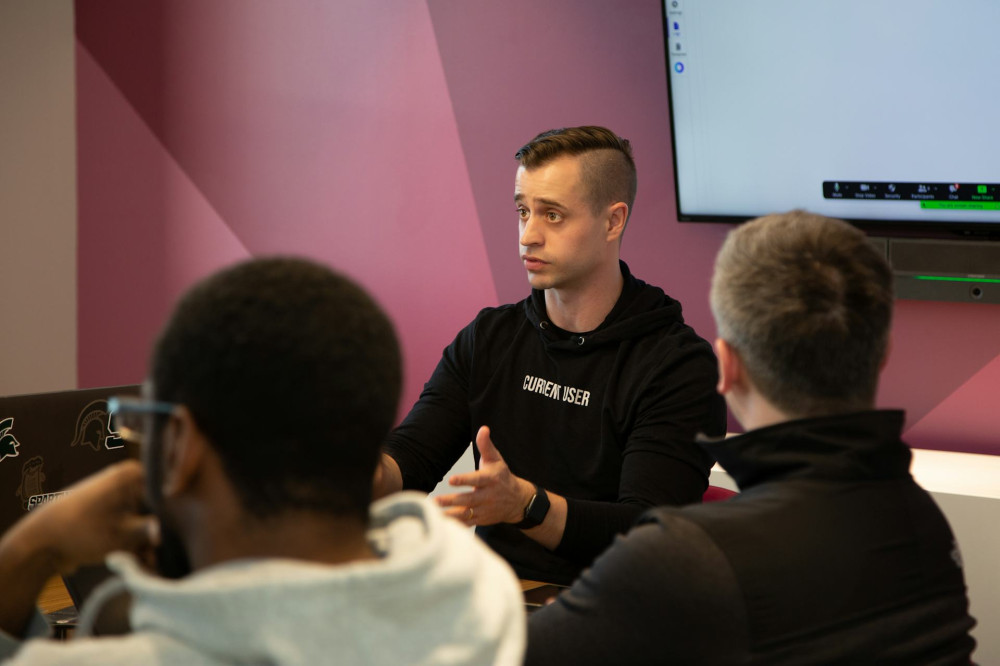
Flipped Classroom: When the Teacher Takes on the Role of Facilitator


Flipped Classroom: When the Teacher Takes on the Role of Facilitator
For generations, teaching has been associated with the image of a teacher standing at the front of the classroom, explaining new material while pupils listen and take notes. But as digital tools and new learning approaches become more widespread, this traditional model is being rethought. One of the most significant innovations is the flipped classroom – a method that turns the conventional structure upside down. Pupils learn new content at home, while classroom time is devoted to discussion, collaboration, and deeper exploration.
This shift transforms the teacher’s role from that of a lecturer to that of a facilitator of learning.
What Does It Mean to “Flip” the Classroom?
In a traditional lesson, new material is introduced in class, and pupils complete exercises or homework afterwards. In a flipped classroom, the process is reversed: pupils watch videos, read texts, or engage with digital materials at home, arriving in class already familiar with the topic.
The classroom then becomes a space for applying and testing knowledge through discussion, group work, experiments, or problem-solving. The teacher can focus on guiding pupils individually, asking probing questions, and encouraging reflection.
The Teacher as Facilitator – Not Lecturer
When teaching is flipped, the teacher’s role changes fundamentally. Instead of being the main source of knowledge, the teacher becomes a facilitator who helps pupils discover, understand, and apply knowledge themselves.
This requires a different kind of preparation. Teachers must design learning activities that motivate pupils to participate actively and create a supportive environment where it is safe to make mistakes and ask questions.
Being a facilitator means asking the right questions rather than providing all the answers – and helping pupils take responsibility for their own learning.
Benefits of the Flipped Classroom
The flipped classroom model offers a range of benefits for both pupils and teachers:
- More active learning: Pupils engage directly with the material instead of passively listening.
- Better differentiation: Teachers can spend more time supporting those who need extra help, while others work more independently.
- Greater ownership: Pupils learn to take responsibility for their own learning process.
- Deeper understanding: Classroom time is used to apply knowledge in practice, strengthening comprehension.
Many teachers in the UK who have adopted this approach report that it increases motivation and makes lessons more interactive and relevant.
Læs også:

Challenges and Pitfalls
Despite its advantages, the flipped classroom also presents challenges. It requires a cultural shift for both teachers and pupils.
Firstly, it depends on pupils preparing at home. If they do not engage with the materials beforehand, classroom activities lose their value. Clear expectations and support in developing good study habits are therefore essential.
Secondly, teachers need access to appropriate digital tools and the skills to create or select high-quality materials. This can be time-consuming at first, but once developed, resources can be reused and adapted over time.
Finally, teachers must be comfortable managing a more unpredictable classroom environment, where discussions and questions can take lessons in new directions.
Getting Started
Introducing a flipped classroom does not have to happen overnight. Many teachers begin by flipping a single lesson or topic.
Here are some steps to get started:
- Choose a suitable topic – ideally one that benefits from discussion or practical application in class.
- Find or create short introductory materials – such as videos, podcasts, or reading tasks for pupils to complete at home.
- Plan classroom activities that build on this preparation – for example, group work, case studies, or experiments.
- Evaluate and adjust – ask pupils what worked well and refine your approach accordingly.
The key is to keep the focus on learning: fostering deeper understanding and engagement.
A New Way of Thinking About Teaching
The flipped classroom is more than just a method; it represents a shift in how we think about education. It moves the focus from teaching to learning – from the teacher’s performance to the pupil’s process.
When the teacher takes on the role of facilitator, lessons become more dialogic, flexible, and learner-centred. It takes courage to let go of traditional control, but the reward is a classroom where pupils are more independent, curious, and responsible for their own development.
Læs også: